
Techno-optimism is (nearly) dead
Despite technology's growth in our daily lives, many Americans are starting to recognize its dark side
Last year, billionaire Peter Thiel spoke to New York Times conservative columnist Ross Douthat about the potential of AI and the continued growth of technology. Thiel, whose combination of Evangelical Christian beliefs, homosexuality, institutional nihilism, and techno-optimism has made him one of the most compelling (and possibly scary) figures in the modern era, argued that, while technological stagnation fears were real, societies were built on progress.
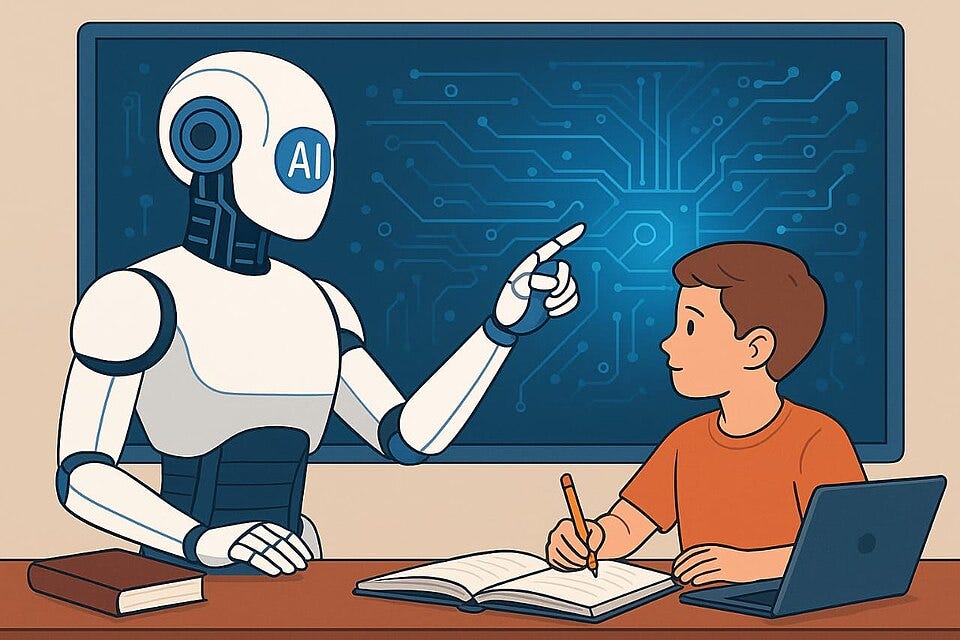
But the most interesting part of the interview was Thiel’s idea that humanity itself didn’t necessarily need to be around for societies to progress. Like fellow billionaires Sam Altman, Elon Musk, and Marc Andreesen1, Thiel’s belief in a transhumanist and posthumanist future is predicated upon immortality, but it’s also fundamentally anti-human. As Thiel told Douthat, progress doesn’t have to be human-driven. While some on the left have criticized Thiel’s interview as proof in his right-wing beliefs about humanity and government, his responses are far more complex than an ideologically neat fit. What Thiel believes to be progress - the hyperefficiency of technology and the normalization/normativization of artificial intelligence in our daily lives - happens to be a majoritarian view. More Americans believe technological advancements can help society, but they don’t share that optimism when it comes to who is controlling those advancements.
This is why techno-optimism might be trending towards more of a minoritarian view than it has been in decades, as more Americans are beginning to come to grips with what an AI-driven future will mean: their jobs and economic well being. This is why the pace of technological advancements, particularly the use of technology as a means of surveillance and control, is now beginning to resemble apocalyptic scenarios rather than optimistic ones. Yet Americans are also caught in a bind: tech has made life easier in many ways, particularly as more people (and companies) try to offload tasks to their computing systems. Having trouble remembering the directions to your favorite restaurant? There are dozens of apps for that. Even the idea of daily commuting and commerce has become more integrated into the social and economic fabric of society without consideration of its long term impacts.
The Jetsons vs. the Terminator
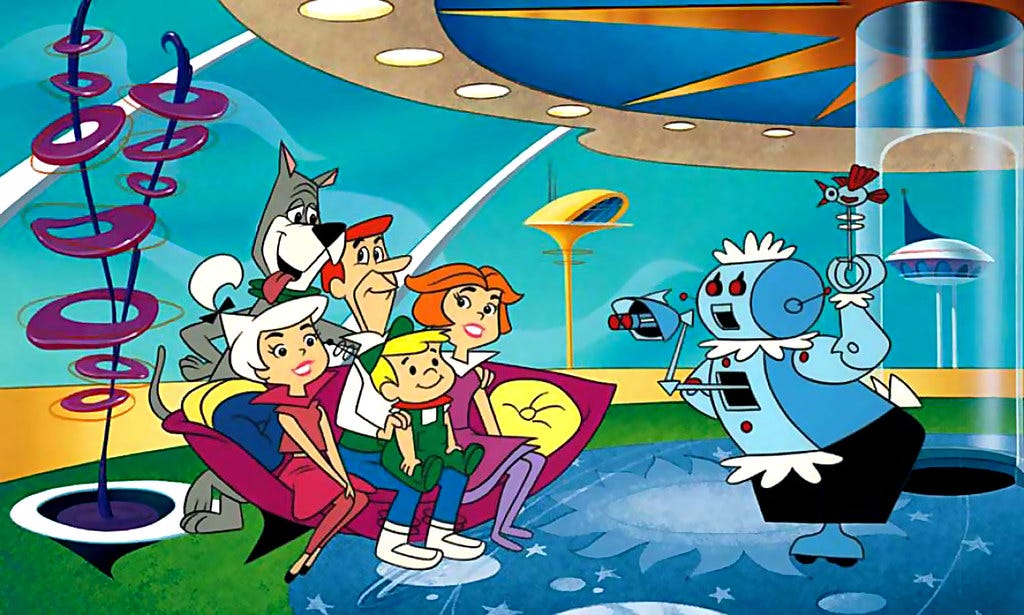
In the years after World War II, American industrial innovation was predicated upon two important factors that would need to exist side-by-side. The first was that technology could make Americans’ lives easier, but the second was that technology would create jobs rather than take them away. In fact, futuristic shows such as The Jetsons imagined a world in which labor could be outsourced to robots while human beings could enjoy a more leisurely life. That embrace of the post-war American dream was what many middle-class communities were built upon: televisions in every home and roads for Americans to enjoy leisurely drives. By the 1990s, Americans’ consumption of electronics and computing products was a driver of the U.S. economy, even as automation began to take away jobs.
Through it all, technology was positioned as a friend and reliable partner to men2. Apple’s Newton, for example, was promoted as a technological breakthrough because it alleviated the need for a human personal assistant. Apple’s selling point was that now middle-class white-collar workers could have help in carrying out their daily tasks without needing to do extra work. It also served as a way of re-assuring male white-collar workers that their labor was essential, even as companies began retiring or eliminating (mostly female) clerical jobs. As Michelle Rodino-Colocino3 observed:
Promotional discourse that launched Newton and other first-generation PDAs imagined shifting clerical work onto White male professionals and managers in ways that reinforced the cultural authority of white-collar masculinity. By promising phallic compensation, office wives and communication with the office, anytime, anywhere, Newton imagined broad-banded professional work in ways that reinforced the status of its imagined consumers. The gadget also provided means for Apple CEO John Sculley to “prove his manhood.” Ambiguities and paradoxes, however, abounded in the promotional discourse. Newton and “father” Sculley appeared as benign patriarchs, as men who feared emasculation, as masculinizing agents, and as entangled in heterosexual, homosexual and homosocial attractions. White-collar masculinity took many forms in the promotion of Apple's first PDA. Newton's launch suggests that promoters of digital technology consider White white-collar masculinity as a kind of compensation that might ease anxieties surrounding the reorganization of work when it entails longer, more intense workdays, changes in the gendered division of labor, and threats of pink slips.
Ironically, the techno-optimism of shows such as The Jetsons would last into the 1980s, even as the economic fallout of blue and white-collar jobs (particularly among non-college educated Americans) grew. Moreover, the idea that technology would lead to a utopian future was challenged in The Terminator, in which humanity is overthrown by robots. Though subsequent Terminator franchise films (and the television series) did not paint the future in such dark terms, the idea of artificial intelligence taking over labor wasn’t just a fever dream anymore. For technology companies and their investors, it became a mission. Rather than helping humanity, many tech leaders - particularly after the dot.com burst and the economic recession of 2008-2011 wiped out millions of jobs - became convinced that rather than augmenting human labor, technology could replace and eventually supercede it. Thiel’s take on posthumanism is especially interesting given his musings about Elon Musk’s own plans for humanoid robots. He told Douthat:
I had a conversation with Elon a few weeks ago about this. He said we’re going to have a billion humanoid robots in the U.S. in 10 years. And I said: Well, if that’s true, you don’t need to worry about the budget deficits because we’re going to have so much growth, the growth will take care of this. And then — well, he’s still worried about the budget deficits. This doesn’t prove that he doesn’t believe in the billion robots, but it suggests that maybe he hasn’t thought it through or that he doesn’t think it’s going to be as transformative economically, or that there are big error bars around it. But yeah, there’s some way in which these things are not quite thought through.
Of course, American and global consumers may be helping to affirm Thiel and others’ posthuman pursuits. After all, more Americans now get almost all of their information from handheld devices, with data now becoming more valuable to companies than currency. By the mid-2010s, smartphones had made MP3 players virtually obsolete and became a form of currency. App developers were trying to find the best ways of reaching users, with data becoming a new gold rush for tech companies. The belief that the consumer would always share and that technology would keep pace with (or outpace) societal challenges led Andreesen to pen the “Techno-Optimist Manifesto,” in which he claimed that technology is the bedrock of human civilization. He wrote, in part:
Our civilization was built on technology. Our civilization is built on technology. Technology is the glory of human ambition and achievement, the spearhead of progress, and the realization of our potential. For hundreds of years, we properly glorified this – until recently. I am here to bring the good news.
We can advance to a far superior way of living, and of being. We have the tools, the systems, the ideas. We have the will. It is time, once again, to raise the technology flag. It is time to be Techno-Optimists.
Andreesen was an evangelist of an unregulated tech sector in which markets could bring out the best in innovation and safeguard human interests. He wrote that “there is no conflict between capitalist profits and a social welfare system that protects the vulnerable. In fact, they are aligned – the production of markets creates the economic wealth that pays for everything else we want as a society. …We believe central economic planning elevates the worst of us and drags everyone down; markets exploit the best of us to benefit all of us.”
Andreesen, Thiel and other “techno-optimists” (or techno-futurists) have increasingly believed that technology - particularly the growth of AI - should be allowed to grow without any guardrails. Regulation, they believe, is an obstacle to innovation, as are concerns about labor. In fact, some of the most strident techno-optimists have lobbied for no regulations on the growth of technology such as AI, but at the same time, have supported the concept of universal basic income (which is what a society would need when most of the human jobs are eliminated).
But the Jetsons future that folks like Andreesen’s dream of is less likely than a future more akin to The Terminator, where intelligent machines eventually concluded that humans were useless and proceeded to wipe them out. In fact, that post-human future has become a more common feature of global media, whether it’s shows such as Black Mirror, movies such as Ex-Machina or iRobot, or even realistic online simulators such as AI 2027 (which may already be outdated given the speed at which AI is being integrated). Media texts have long embraced techno-skepticism (2001: A Space Odyssey, for example), but in recent years, human beings have had to negotiate their own doubts about technology’s future and their increasing reliance upon it.
Technology is only as effective as humanity’s buy-in will take it
The technological revolution might have had majoritarian support if American tech leaders - and many politicians - had been aware of or pretended to be concerned about its impact on labor markets. Companies such as Amazon and Meta, for example, boastfully announced layoffs as part of labor shifts to AI. While their stock prices have (mostly) gone up, Americans’ anger at the brazenness of tech elites in taking their jobs and consuming their resources hint at a potential breaking point in the near future. While the majority of Americans have supported technological evolution, the majoritarian backlash to data centers, for example, and AI-initiated layoffs may be where Thiel and Andreesen’s dreams of a posthuman future hit the wall. A recent Politico poll, for example, found that while a majority of Americans supported data centers in theory, opposition grew if increased costs and President Donald Trump’s involvement were part of the development of such data centers.
It isn’t just the labor, micro-economic, and environmental impacts that are driving a decline in optimism about technology, particularly the integration of AI. It’s the fact that our U.S. economy has become so reliant on the success of technology that those companies invested in AI growth may be becoming too big to fail. And the growing presence of tech companies, including those like OpenAI, in Americans’ 401k’s increases the risk that an AI crash could have an earthquake-like impact on the American economy, similar to that of the financial crash of 2008 that led to the Great Recession. It’s also important to note just how many companies transitioning to AI are reliant upon foreign investments, something to keep an eye out for as the Iran War drags on. Countries such as the United Arab Emirates, Saudi Arabia, and Qatar have invested billions in American technologies such as AI and cryptocurrency. Just how long will it be before investors from those countries begin to pull the plug in order to re-build their own economies? Additionally, for investors like Thiel, there’s a seeming hypocrisy in embracing technology’s posthuman potential while also doubling down on humanity’s social biases. Thiel - and Musk - have railed against a so-called “woke mind virus,” and as such, their proclamations and investments point to awarding technology funding not on merit, but ideological conformity to their own worldviews.
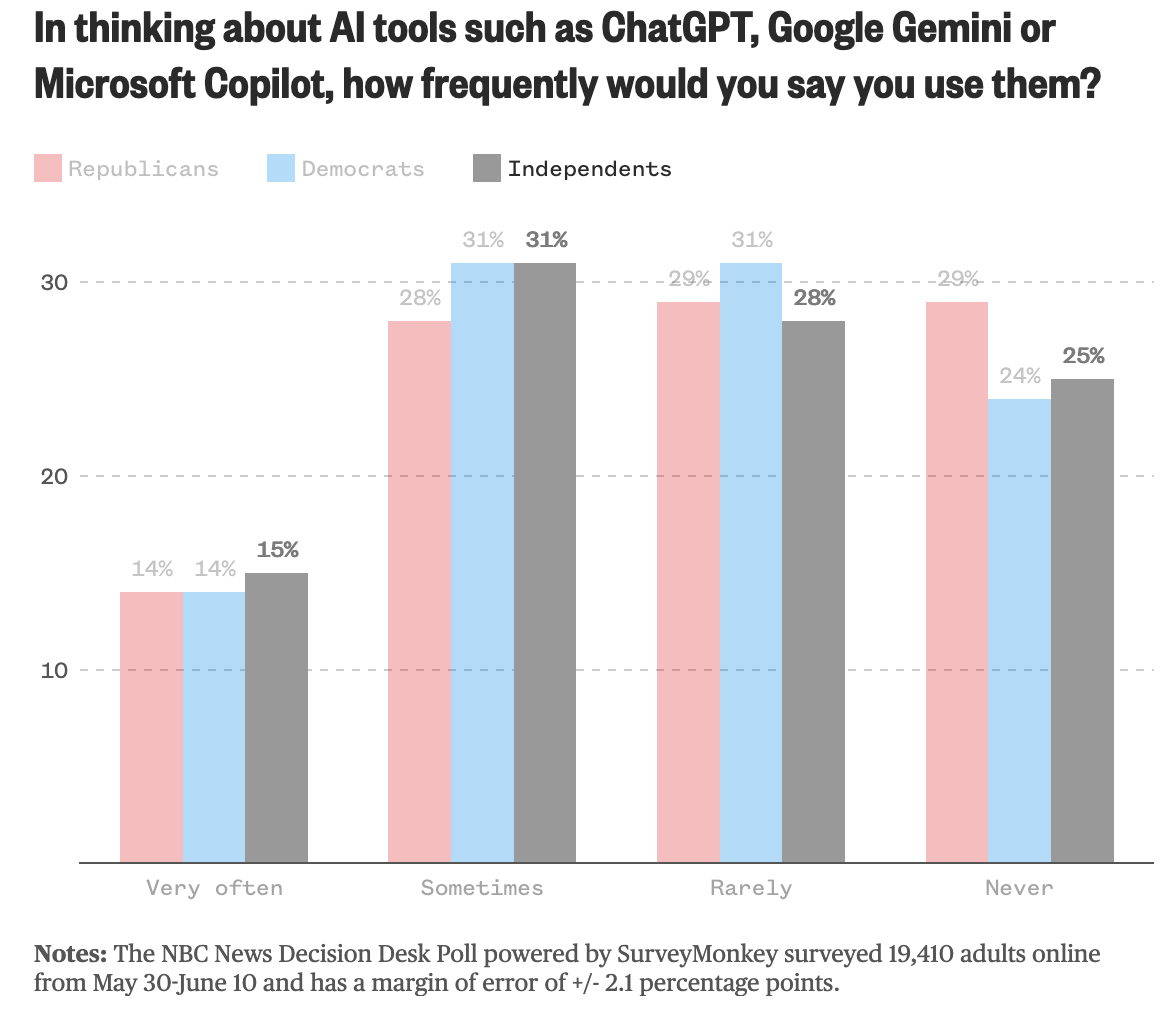
The rub of Americans’ growing skepticism about the role of AI and technology is that for the majority of Americans, particularly those under age 30, daily tasks are increasingly reliant upon both. An NBC News poll highlights that even as more Americans use AI programs such as ChatGPT, their optimism about AI’s long-term benefits is less enthusiastic than among people who believe AI will make their lives much worse. That should be a warning sign for those such as Thiel and Andreesen who support the short-term anti-regulation climate championed by Trump (and spearheaded by billionaire tech leader David Sacks).
It’s clear that the rose-colored view of AI and technology overall are changing, particularly as more Americans are understanding the labor and environmental costs. The question is whether tech titans such as Thiel and Andreesen are able to convince policymakers to stay on the sidelines while AI grows without regulatory interference.
Will techno-pessimism prevail?
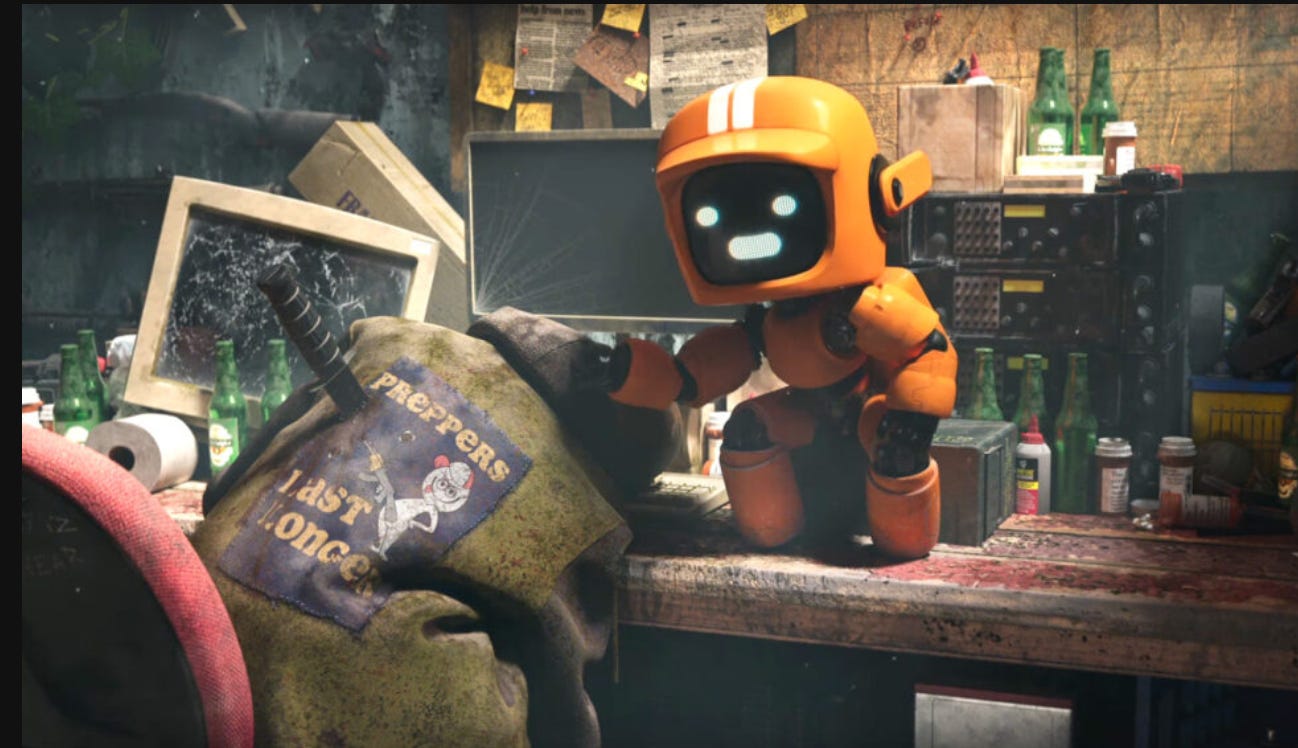
With the labor - and environmental - impacts of AI already being felt across the United States, is techno-optimism a thing of the past? After all, we’re now over 30 years removed from when Apple’s Newton was seen as a helpful add-on to our daily lives, just as Blackberry and later, the iPhone, were in subsequent years. But when technology’s utility is outweighed by its disruptiveness, is techno-optimism warranted. In shows such as Netflix’s Love, Death & Robots, humanity’s hubris is seen as its downfall, particularly in iconic episodes such as “Three Robots” and the follow-up, “Three Robots - Exit Strategies.” AI blogger Nick Potkalitsky notes that Andreesen’s techo optimism might be driven by a lack of understanding of how most human beings are adapting to speed of technology. He writes that Andreesen’s “framing, dominion, control, mastery, feels increasingly disconnected from the reality that most people are actually living.”
But Potkalitsky isn’t so sure that techno-pessimism will become a majoritarian sentiment, particularly if the tech sector recognizes the long-term benefits of AI’s uses and its ethical application. He writes:
The waning of techno-futurism is not the arrival of techno-pessimism. It is something more interesting and more difficult: the slow, uneven emergence of a critical posture, one that refuses both uncritical adoption and reflexive rejection in favor of harder questions about what this technology actually does, who it serves, and what it costs.
Potkalitsky believes that humans will eventually adapt to AI. The question is whether zealous techno-optimists and posthumanists such as Thiel, Andreesen, and Altman will be able to adapt to Americans’ growing resistance to an unchecked growth of AI and other technologies. If not, it might be a race to see if American and global regulatory regimes and the masses will be able to overtake the tech companies and their funders before the growth becomes too big to fail. Perhaps the markets will intervene quickly enough for a reality check, or at least a tempering of the unbridled (and unmoored) techno-optimism that seems to be dominant sentiment of the tech elites.
Friday (paid): Egypt was not ready for democratic majoritarianism in 2011. Will it be anytime soon?
Andreesen is an investor in Substack.
I’m intentionally using that term because men not only dominated the workforce, they needed to be reassured that their jobs would not be taken by robots or women.
Michelle Rodino-Colocino. 2 “Is That a PC in Your Pocket, or Is It Something More?” In Communicating Marginalized Masculinities : Identity Politics in TV, Film, and New Media, edited by Ronald L. Jackson II, and Jamie E. Moshin. Routledge, 2013, p. 33-48.